
Engineered Wood Siding Installation in Grady County, OK
Expert Engineered Wood Siding Installation for Grady County, OK Homes & Businesses
Get expert engineered wood siding installation in Grady County, OK. Serving Chickasha, Blanchard, Tuttle & more. Free estimates — call (405) 529-1859 today.
Engineered wood siding installation is the process of fitting composite wood panels or planks — manufactured from wood fibers, resins, and binding agents — onto the exterior walls of a home or commercial structure to provide both aesthetic appeal and lasting weather protection. Unlike traditional solid wood, engineered wood siding is engineered specifically to resist moisture, impact, and the extreme temperature swings that define life in southwestern Oklahoma.
At Grady County Siding Company, we bring deep familiarity with the red clay soils, tornado corridors, and humid continental climate of Grady County to every installation project. From the historic neighborhoods near downtown Chickasha to the newer subdivisions spreading across Blanchard and Tuttle, our crews understand how local building stock, wind exposure, and seasonal moisture cycles affect siding performance. Whether you are building new, replacing aging wood clapboards, or upgrading from deteriorating vinyl, our team delivers engineered wood siding installations built to withstand what Oklahoma demands. Call us today at (405) 529-1859.
Understanding Engineered Wood Siding Installation
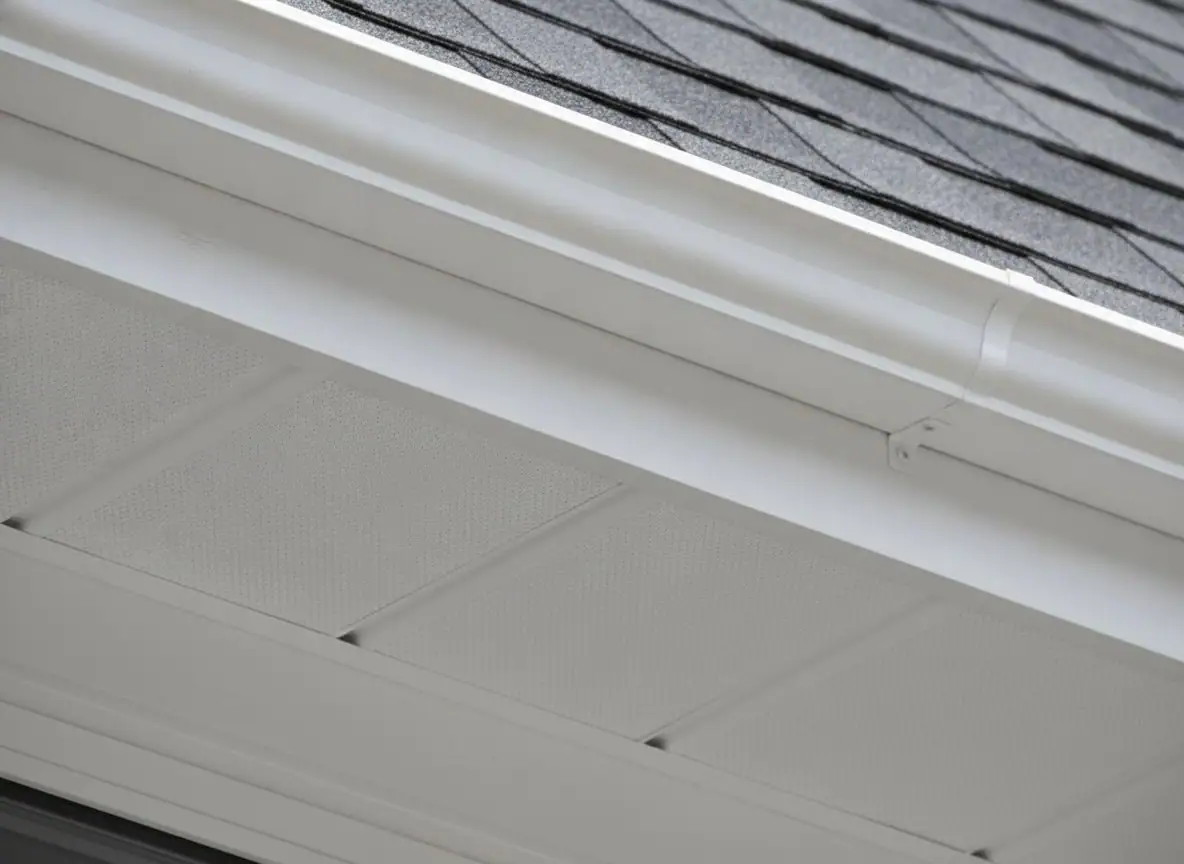
Engineered wood siding — often sold under brand names such as LP SmartSide and Weyerhaeuser Edge — is a composite exterior cladding manufactured by combining wood strands or fibers with resins, waxes, and zinc borate preservatives. The resulting panels are pressed under heat and pressure into lap siding planks, vertical panels, soffit boards, and trim pieces that closely mimic the appearance of traditional wood without the structural vulnerabilities that make solid wood siding problematic in high-humidity, high-wind environments like Grady County.
The product category emerged in the 1990s as a direct response to consumer demand for wood-look siding that could resist rot, insects, and moisture absorption better than cedar, pine, or hardboard. Early-generation hardboard siding — installed widely across Oklahoma from the 1960s through the 1980s — was notorious for swelling, delaminating, and failing prematurely, which led to class-action settlements affecting tens of thousands of homes. Modern engineered wood is a fundamentally different product, engineered with SmartGuard technology and continuous press manufacturing that eliminated most of those historical failure modes.
Read moreShow less
In Grady County, engineered wood siding is particularly prevalent on homes constructed after 2005, when builders in Chickasha, Blanchard, and Tuttle began specifying it as a cost-effective alternative to fiber cement. The product is well-suited to the mix of single-story ranch homes, two-story craftsman builds, and agricultural outbuildings that dominate the county’s residential landscape. Because Grady County sits within FEMA Wind Zone IV and experiences average annual wind gusts that routinely exceed 50 mph, engineered wood panels installed with proper fastening patterns — nailed every 16 inches into structural framing — outperform many alternative cladding materials.
Installation involves surface preparation, moisture-barrier installation, starter strip placement, panel coursing, corner and window trim integration, caulking of all penetrations, and a factory-primed or field-applied finish coat. Each phase requires precise execution to achieve the manufacturer’s warranty and to meet Grady County building code requirements for wind uplift resistance and water-resistive barriers under Oklahoma’s adopted residential building code.
Signs You Need Engineered Wood Siding Installation in Grady County
Structural Warning Signs
- Visible buckling or warping of siding panels, particularly on west-facing walls after summer heat cycles exceeding 100°F
- Gaps wider than 1/8 inch between siding boards or at corner joints
- Soft or spongy panels when pressed, indicating moisture infiltration and substrate rot
- Visible cracks running horizontally across hardboard or old wood siding planks
Moisture and Biological Signs
- Dark staining, mold streaks, or mildew growth on the siding surface that reappears within weeks of cleaning
- Paint peeling from the exterior in sheets rather than flaking gradually — a sign of moisture vapor pushing outward through the wall assembly
- Rust staining below nail heads indicating fastener corrosion and panel delamination
- Interior wall dampness or drywall staining corresponding to exterior siding failure locations
Storm and Impact Damage
- Cracked or missing siding panels following hailstorms — Grady County averages 3 to 5 significant hail events per year
- Wind-lifted panel edges following storms, especially on gable ends
- Exposed housewrap or sheathing visible through displaced panels
Urgency Indicators
If two or more of the above signs are present simultaneously, or if interior moisture damage is already occurring, schedule an inspection immediately. Delayed replacement accelerates structural sheathing damage and can double total remediation costs.
Free, no-obligation estimates
Talk to Grady County Siding Company
Tell us what you need and we’ll take it from there.
Our process
Our Engineered Wood Siding Installation Process in Grady County
Our installation process is designed to meet both manufacturer specifications and the specific durability demands of Grady County’s climate. Each project follows a structured sequence that typically spans 3 to 7 days for a standard single-family home, depending on square footage and existing siding condition.
- 01
Free On-Site Assessment (Day 1 — 1 to 2 Hours)
We begin with a thorough inspection of your existing siding, sheathing, and moisture-resistive barrier. We document wind exposure on each elevation, check for soil-movement-related framing gaps — a particular concern in Ninnekah and Verden — and photograph all
- 02
Permitting and Material Procurement (Days 1 to 3)
We file for any required Grady County building permits and place material orders calibrated to your home’s exact measurements. We account for the 10 to 15 percent waste factor standard for Oklahoma homes with complex rooflines and numerous window penetrations.
- 03
Removal and Substrate Preparation (Day 2 to 3 — 4 to 8 Hours)
Existing siding is removed, substrate sheathing is inspected, and any rotted or storm-damaged OSB or plywood is replaced. Framing irregularities caused by clay-soil foundation movement — common in older Chickasha and Blanchard homes — are shimmed and corrected
- 04
Moisture-Resistive Barrier Installation (Day 3 — 2 to 4 Hours)
We install a continuous WRB (water-resistive barrier) in accordance with Oklahoma residential code, lapping seams 6 inches horizontally and 12 inches vertically, and flashing all window and door openings with self-adhering membrane tape to prevent the wind-dri
- 05
Engineered Wood Panel Installation (Days 3 to 5 — Project Core)
Panels are installed starting from the foundation starter strip, coursed upward with manufacturer-specified overlap (typically 1.25 inches), and fastened with hot-dipped galvanized ring-shank nails at 16-inch stud spacing. All cut ends receive field-applied en
- 06
Trim, Caulking, and Finishing (Day 5 to 6 — 4 to 6 Hours)
All corner boards, window trim, and frieze boards are installed, and all joints and penetrations are sealed with paintable polyurethane caulk. A finish coat of exterior paint in your selected color is applied if not using pre-finished panels.
- 07
Final Inspection and Cleanup (Day 6 to 7 — 1 to 2 Hours)
We conduct a panel-by-panel visual inspection, confirm all nail patterns, and perform a water test at critical flashings. All debris is removed, and your warranty documentation is delivered.
Engineered Wood Siding Methods and Approaches
Horizontal Lap Siding Installation
The most common approach in Grady County, horizontal lap panels — typically 4-inch, 6-inch, or 8-inch reveal widths — are installed in overlapping courses from bottom to top. This method is ideal for traditional ranch homes in Chickasha, Blanchard, and Tuttle, provides excellent wind-driven rain resistance, and qualifies for the full LP SmartSide warranty. It is the preferred method for homes with stucco or hardboard replacement projects.
Vertical Panel Installation
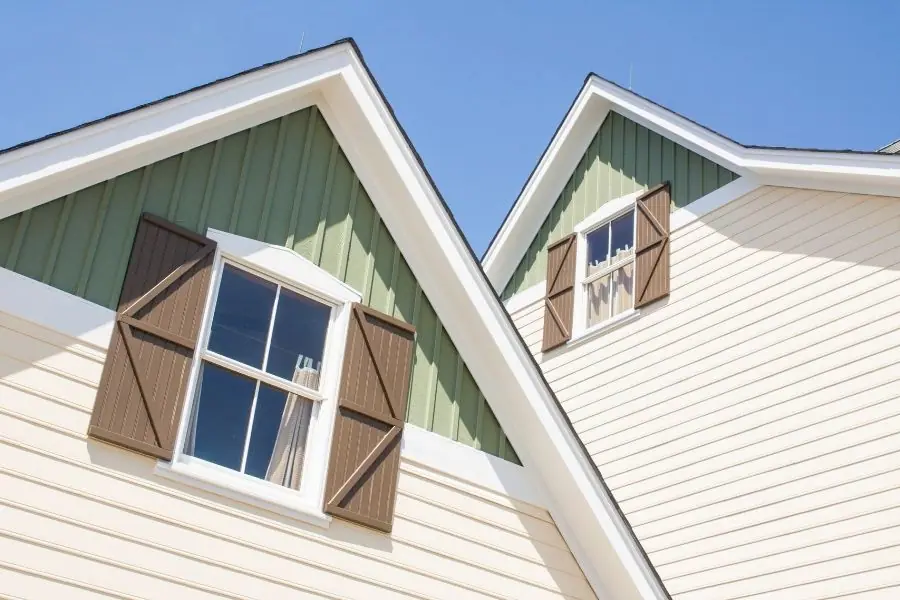
4×8 or 4×9 vertical groove panels are installed in a single-story height application, producing a board-and-batten appearance without the cost of individual battens. This method is especially popular in Bridge Creek and rural Bradley for agricultural buildings, workshops, and new construction farmhouses. Vertical installation requires a horizontal nailing base at mid-wall and careful WRB detailing to prevent moisture tracking downward behind panels.
Shake and Shingle Panel Application
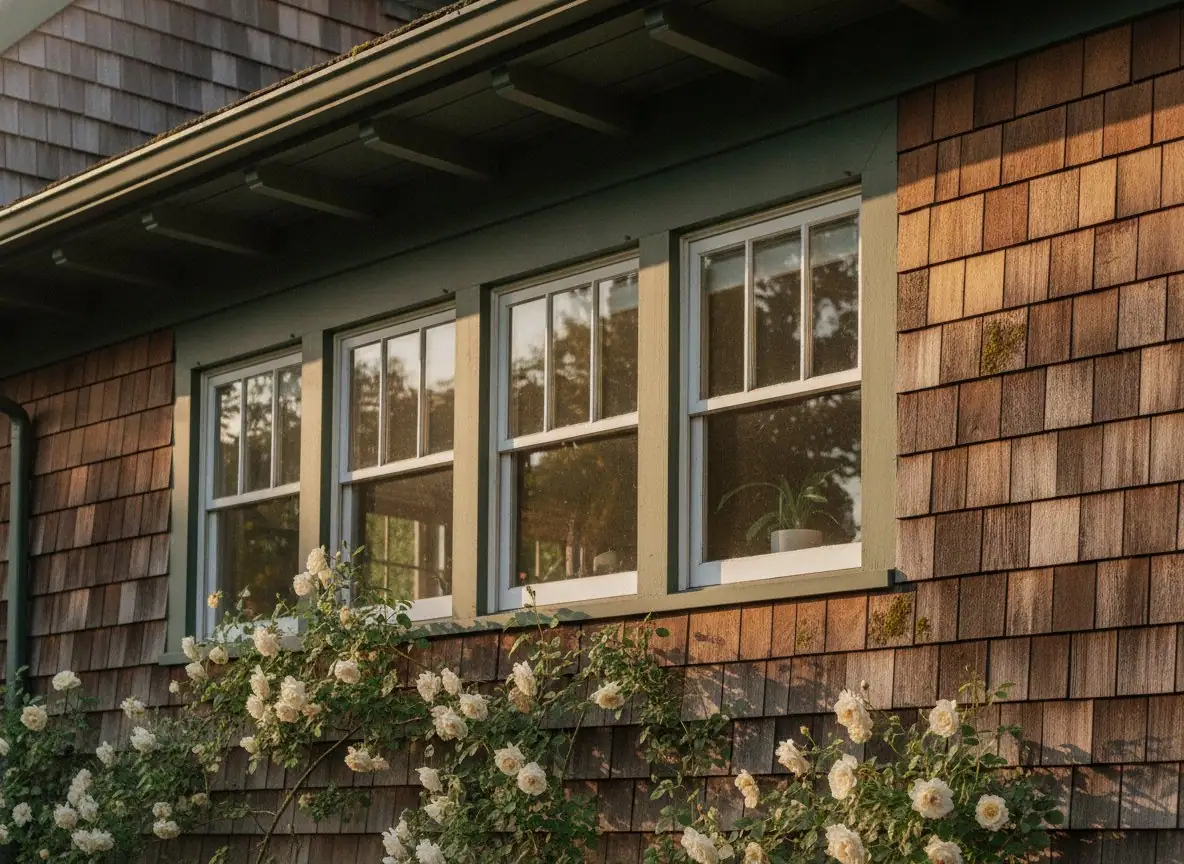
Engineered wood shake panels simulate cedar shakes and are typically applied to gable accents, upper-story dormers, or full elevations on craftsman-style homes. This method is increasingly selected by homeowners in Minco and Pocasset for new builds where cedar-look aesthetics are desired without cedar’s rot vulnerability in Oklahoma’s humid summers.
Hybrid Cladding Systems
On complex homes combining multiple architectural styles, we combine horizontal lap siding on primary elevations with vertical panels or shake accents at gable ends, achieving visual variety while maintaining a continuous moisture barrier across all transitions — critical for Grady County homes exposed to multi-directional storm wind patterns.
Engineered Wood Siding Installation Cost in Grady County, OK
The cost of engineered wood siding installation in Grady County typically ranges from $6.50 to $12.00 per square foot installed, including materials, labor, trim, and WRB. For a typical 1,500-square-foot home exterior in Chickasha or Blanchard, total project costs generally fall between $9,750 and $18,000. Larger homes or those requiring extensive substrate repair may reach $22,000 to $28,000.
Key Cost Factors
- Substrate condition: Homes with rotted OSB or storm-damaged sheathing — common after hail events — add $1.50 to $3.00 per square foot in repair costs before new siding can be installed.
- Siding profile and panel size: Horizontal lap panels are the most economical; shake panels cost 20 to 35 percent more due to labor intensity and panel cost.
- Story height: Two-story homes in Tuttle and Blanchard’s newer subdivisions require scaffolding, adding $500 to $1,500 to project totals.
- Removal and disposal: Tear-off of existing siding adds $0.75 to $1.50 per square foot, depending on material type and layer count.
- Paint and finishing: Pre-primed engineered wood panels can be painted in the field for $1.00 to $2.00 per square foot additional, depending on paint grade selected.
Read moreShow less
Local Pricing Notes
Material freight costs in Grady County are moderate, with distribution centers accessible via I-44 and US-81. Projects in more rural service areas — Verden, Amber, and Middleberg — may carry a small mobilization surcharge of $150 to $300. We provide free, itemized written estimates for all projects. Call (405) 529-1859 to schedule yours.
For comparison, fiber cement siding installation typically costs $7.50 to $14.00 per square foot installed in Grady County, making engineered wood a cost-competitive alternative with a comparable lifespan.
Neighborhoods and Communities We Serve in Grady County
Chickasha — Historic Core and East Side
Chickasha’s established neighborhoods — including the College Hill district and the blocks surrounding the Grady County Fairgrounds — feature homes built primarily between 1920 and 1970. These properties commonly have original wood clapboard or aging hardboard siding in need of full replacement. Foundation movement on Chickasha’s expansive clay soils frequently causes joint gaps requiring substrate correction before new engineered wood can be installed properly.
Blanchard and Bridge Creek
Rapid residential growth in Blanchard since 2010 has produced a mix of builder-grade vinyl and engineered wood installations, many now approaching their first major maintenance cycle. Bridge Creek, rebuilt substantially after tornado damage in 2013, features newer construction where engineered wood is already specified but where installation quality varies widely by original contractor.
Tuttle and Minco
Tuttle’s growth corridor along SH-37 includes subdivision homes from the 2000s and 2010s. Minco’s older residential blocks, dating to the 1940s and 1950s, present full-replacement opportunities with unique challenges including narrow lot setbacks that limit staging access.
Rural Communities — Verden, Amber, Ninnekah, and Rush Springs
Agricultural and rural residential properties throughout the county benefit from engineered wood’s impact and pest resistance — critical in areas where woodpecker and termite pressure is elevated. We serve all rural Grady County zip codes with no additional travel fee for most locations.
Engineered Wood Siding Maintenance Tips for Grady County Homeowners
- Inspect caulk joints annually each spring — after Grady County’s freeze-thaw cycles, which can occur as late as March, caulk at window and door trim joints may crack and require reapplication before the May–June wet season.
- Clean siding surfaces twice per year using a low-pressure garden hose and mild detergent. Avoid pressure washing above 1,200 PSI, which can force water behind panels and compromise the WRB.
- Repaint or apply a fresh topcoat every 8 to 10 years — Oklahoma’s UV index, which averages 7 to 9 during summer months, accelerates paint oxidation on south and west elevations faster than on north-facing walls.
- Maintain 2-inch clearance between siding and soil grade — particularly critical for Grady County’s red clay soils, which can hold moisture against the siding base and accelerate edge deterioration.
- Trim vegetation away from siding surfaces to prevent trapped moisture — a common issue in established Chickasha neighborhoods with mature shrubbery planted against foundation walls.
- Check for woodpecker damage each fall — a recurring issue in rural Grady County areas. Fill any holes with exterior wood filler and repaint promptly to prevent moisture entry.
- Inspect attic ventilation annually to prevent moisture vapor from condensing behind siding — high indoor humidity during Oklahoma summer months can drive vapor outward through wall assemblies.
Why Choose Grady County Siding Company
Grady County Siding Company is a locally operated exterior contractor focused exclusively on the communities of Grady County and surrounding areas. Unlike regional franchise contractors who rotate crews unfamiliar with Oklahoma’s specific wind, soil, and climate conditions, our team lives and works in the county we serve. We understand the difference between a siding failure caused by clay-soil foundation movement in Ninnekah versus storm-impact damage in Bridge Creek — and we tailor our installation approach accordingly.
We install engineered wood siding in full compliance with manufacturer specifications required to maintain product warranties and in accordance with Oklahoma’s adopted residential building codes. Every installation includes proper WRB integration, flashing at all penetrations, and correctly spaced fastener patterns designed to meet Grady County’s wind exposure requirements.
Read moreShow less
Beyond engineered wood, we offer a complete range of exterior cladding services including siding repair, siding replacement, vinyl siding installation, James Hardie siding installation, and board and batten siding installation. Our customers across Chickasha, Blanchard, Tuttle, and the surrounding communities trust us for honest assessments, clear written estimates, and installations that perform for decades. Call us at (405) 529-1859 to get started.
FAQ
Frequently Asked Questions — Engineered Wood Siding Installation in Grady County, OK
How much does engineered wood siding installation cost in Grady County?
Most homeowners in Grady County pay between $9,750 and $18,000 for a complete engineered wood siding installation on a standard single-family home, or roughly $6.50 to $12.00 per square foot installed. Homes requiring significant substrate repair following storm or moisture damage may see higher totals. We provide free written estimates for every project.
How long does engineered wood siding last in Oklahoma’s climate?
When properly installed and maintained, engineered wood siding carries a manufacturer’s warranty of 50 years on products like LP SmartSide. In Grady County’s conditions — including UV exposure, humidity cycling, and wind — homes that maintain paint topcoats and caulk joints on schedule routinely achieve 30 to 50 years of service life before any significant issues develop.
Is engineered wood siding better than vinyl for Grady County homes?
For most Grady County homeowners, engineered wood outperforms vinyl in three critical areas: impact resistance to hail (Grady County averages 3 to 5 hail events per year), dimensional stability in high-heat conditions (vinyl can warp above 165°F, a temperature Oklahoma exterior walls routinely exceed), and structural rigidity in high-wind events. Vinyl has lower upfront cost, but engineered wood typically provides better long-term performance in this climate. See our vinyl siding installation page for a full comparison.
Do I need a permit for siding replacement in Grady County?
Grady County and its incorporated municipalities have varying permit requirements. In Chickasha, a building permit is generally required for full siding replacement. In unincorporated Grady County, requirements may differ by project scope. We handle all permit applications on your behalf as part of our standard installation process.
How long does installation take?
A standard single-story home in Chickasha or Blanchard typically takes 3 to 5 business days from start of removal to final inspection. Two-story homes or projects with significant substrate repair may require 5 to 7 business days. Weather delays during Grady County’s severe storm season (April through June) are occasionally unavoidable and are communicated promptly.
Can engineered wood siding handle Grady County’s hailstorms?
Engineered wood panels are significantly more impact-resistant than vinyl or traditional wood. LP SmartSide panels, for example, are tested to withstand 1.5-inch hail impacts without cracking or delamination under standard testing protocols. While extreme hail events — such as the June 2019 storm that produced 2.5-inch hail in the Chickasha area — can cause damage to any cladding type, engineered wood consistently outperforms vinyl in post-storm damage assessments.
Will engineered wood siding work on my older Chickasha home?
Yes. Engineered wood siding is compatible with wood-framed homes of any age. For older homes — particularly those built in the 1940s through 1970s in Chickasha’s College Hill and downtown-adjacent neighborhoods — we assess the existing framing and sheathing condition during our free inspection to identify any substrate corrections needed before installation begins.
Do you also offer fiber cement or James Hardie siding?
Yes. We install the full range of premium exterior cladding products including fiber cement siding installation and James Hardie siding installation. During your free estimate, we walk through the pros, cons, and costs of each option so you can make an informed decision for your home and budget.
Get a Free Engineered Wood Siding Installation Estimate in Grady County Today
Whether you are replacing failing hardboard on a 1960s Chickasha ranch home, completing a new build in Blanchard’s growing subdivisions, or repairing storm damage in Bridge Creek or Tuttle, Grady County Siding Company is ready to help. Our team provides free, no-obligation on-site estimates with detailed written scopes of work — no surprise costs, no high-pressure tactics.
We serve all Grady County communities including Chickasha, Blanchard, Tuttle, Minco, Ninnekah, Bridge Creek, Verden, Amber, Pocasset, Rush Springs, Middleberg, Bradley, Norge, and Alex. We also serve customers in nearby Oklahoma City.
Call us now at (405) 529-1859 to schedule your free inspection and estimate. Our team is available Monday through Saturday, and we respond to all inquiry calls within one business day. Protect your home from Oklahoma’s weather — contact Grady County Siding Company today.
Request a Free Estimate Online
Schedule a Siding Inspection
Get in touch
Find siding help near you
Request a free estimate online or give us a call — our team will follow up quickly.
- Call us(405) 529-1859
- Visit1807 S 9th St, Chickasha, OK 73018
- HoursMon - Sun: 7AM - 7PM