Panel Siding in Grady County, OK
Safe, Code-Compliant Panel Siding in Grady County, OK
Need panel siding in Grady County, OK? Grady County Siding Company installs, repairs & replaces panel siding in Chickasha, Blanchard & beyond. Call (405) 529-1859.
Panel siding is a versatile exterior cladding system installed in large, flat sheets that cover a home’s structural framing quickly and efficiently. Unlike lap siding or individual shingles, panel siding spans broad wall surfaces with fewer seams, creating a cleaner profile and a faster installation timeline. For homeowners throughout Grady County, Oklahoma, panel siding offers a practical solution tailored to the region’s demanding weather patterns, ranging from brutal summer heat to severe tornado-season storms that frequently track through the Canadian River corridor.
At Grady County Siding Company, we specialize in panel siding installations, replacements, and repairs designed specifically for the soil conditions, wind loads, and humidity fluctuations that define life in communities like Chickasha, Blanchard, and Tuttle. Our crews understand local building codes enforced by Grady County’s planning and zoning office, and we source materials rated to withstand the wind events that make this part of central Oklahoma one of the most weather-intensive regions in the country. Call us today at (405) 529-1859 to schedule your free assessment.
Understanding Panel Siding
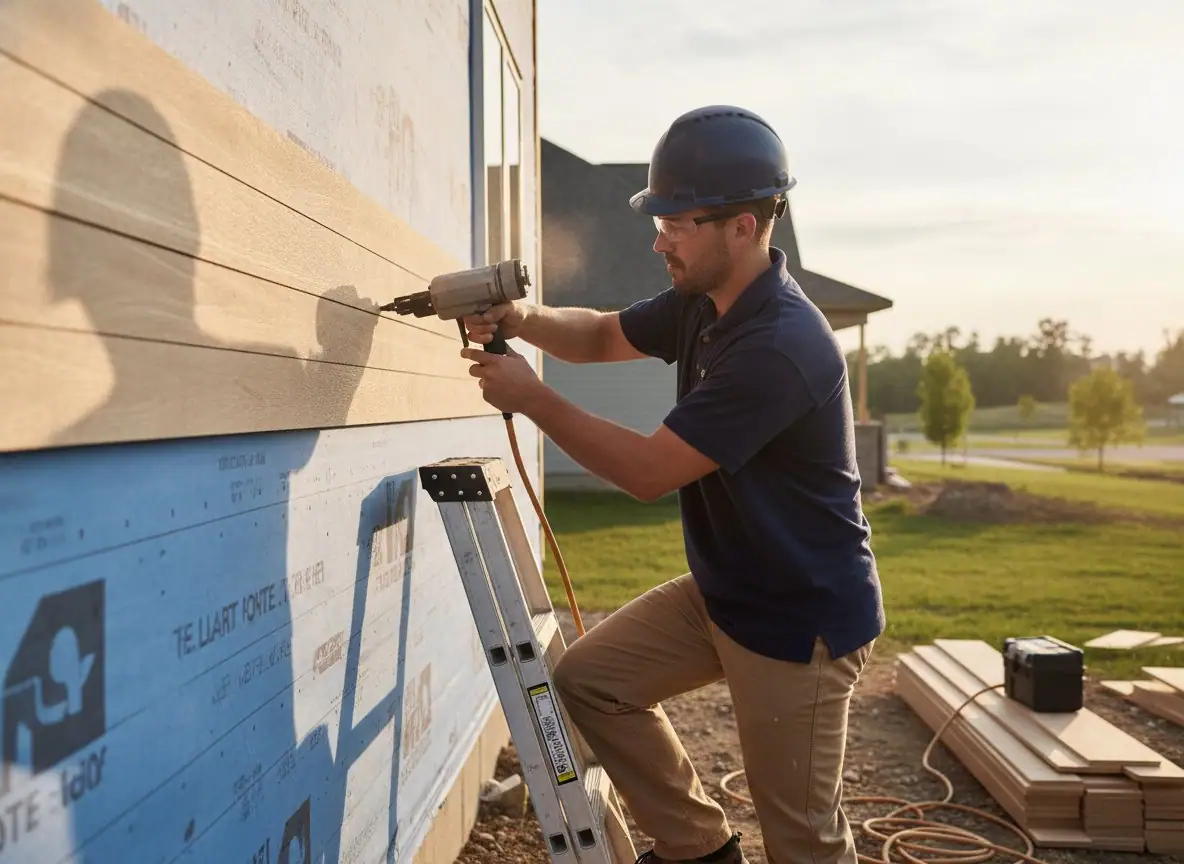
Panel siding refers to any exterior wall cladding manufactured and installed in wide, vertical or horizontal sheet form rather than in narrow individual planks. The most common formats include oriented strand board (OSB) with a factory-applied finish, T1-11 plywood siding, large-format fiber cement panels, smooth or textured vinyl sheet panels, and engineered wood panels. Each product type serves a specific architectural purpose, and each performs differently depending on the moisture exposure, UV intensity, and structural movement that a particular building experiences over its lifetime.
Historically, panel siding gained widespread popularity across rural Oklahoma during the post-World War II housing expansion of the late 1940s and 1950s, when agricultural communities like those in Grady County needed cost-effective, fast-to-install cladding for new farmhouses, agricultural storage buildings, and modest residential construction. T1-11 plywood panels became a staple on ranch-style homes throughout Chickasha and the surrounding townships during this era because a two-person crew could sheath an entire exterior in a single day, reducing labor costs that were always a concern for farming families working tight margins.
Read moreShow less
Today, modern panel siding has evolved far beyond those early plywood sheets. Fiber cement panels from manufacturers like James Hardie now offer panels up to 4 feet wide and 10 feet tall that resist moisture absorption, insect damage, and fire. Engineered wood panels incorporate resins and binders that dramatically improve dimensional stability compared to raw plywood, meaning they expand and contract less when temperatures swing from the 105°F summer highs Grady County regularly experiences to the near-zero readings that accompany January arctic blasts from the Canadian front.
Panel siding is used extensively on single-family residences, metal agricultural buildings with wood-framed additions, commercial storefronts, and rural outbuildings across Grady County. Its broad surface coverage makes it especially effective on gable ends, garage facades, and accessory dwelling units where speed and weather resistance are equally important. Learn more about fiber cement panel options available through our team.
Why Panel Siding Is Needed in Grady County, OK
Tornado and High-Wind Exposure
Grady County falls within Oklahoma’s highest-risk tornado belt. The May 20, 2013 EF5 tornado that devastated Moore, Oklahoma passed near the northern edge of Grady County’s influence area, and the May 31, 2013 tornado event that struck El Reno generated the widest tornado ever recorded in U.S. history at 2.6 miles across, tracking along the Canadian River just north of the county line. Locally, the October 2019 tornado that touched down near Chickasha caused documented structural damage to multiple residential properties along State Highway 81. Panel siding, when properly fastened with code-compliant ring-shank nails or screws at 6-inch field spacing and 3-inch edge spacing, provides meaningful resistance to wind-driven debris and pressure differentials that rip improperly installed siding from wall framing.
The Canadian River Humidity Gradient
The Canadian River runs along Grady County’s northern boundary, and the moisture gradient it creates produces relative humidity levels that can swing 40 to 60 percentage points between a humid August morning and a dry February afternoon. Homes in the Bridge Creek and Tuttle areas immediately adjacent to the river bottomlands experience some of the most extreme moisture cycling in the county. Wood-based panel siding on these properties shows measurable swelling — sometimes exceeding 3/16 of an inch in panel width — during wet spring seasons, which can force panels off their nailing flanges if original installation gaps were insufficient.
Expansive Grady County Clay Soils
The Teller-Devol-Reinach soil association that dominates much of eastern Grady County contains high concentrations of smectite clay, which expands when wet and contracts when dry. Foundation movement of 1 to 3 inches over a season is not unusual on unpiered slab foundations in Blanchard, Ninnekah, and the Amber community. This vertical movement transfers directly to wall framing and panel siding, causing panel edges to separate at butt joints, caulk lines to crack, and bottom edges to pull away from water table trim — all of which creates pathways for moisture infiltration that accelerate siding deterioration exponentially.
Intense UV Radiation and Thermal Cycling
Chickasha records an average of 230 sunny days per year. The UV index during June, July, and August routinely reaches 10 or 11 on south- and west-facing elevations, breaking down factory finishes on lower-grade panel siding within 5 to 7 years. Combined with daily thermal cycling that moves panel surfaces from 55°F at dawn to 160°F surface temperature by mid-afternoon, the cumulative stress on fasteners, caulk joints, and panel edges is substantial. Choosing panels with factory-applied UV-resistant primers and top coats, or specifying fiber cement panels that are dimensionally stable under thermal load, directly addresses this Grady County-specific challenge. Schedule a siding inspection to evaluate your current panels’ UV condition.
Free, no-obligation estimates
Talk to Grady County Siding Company
Tell us what you need and we’ll take it from there.
Signs You Need Panel Siding Service in Grady County
Structural Warning Signs
- Visible panel gaps wider than 1/4 inch at butt joints or corner boards, indicating foundation movement or fastener failure
- Panels that sound hollow or feel soft when pressed, suggesting moisture-compromised substrate beneath the surface layer
- Buckling or bowing across the panel face by more than 1/2 inch over an 8-foot span
- Bottom panel edges sitting in standing water after rain events, common near homes with inadequate grade slope in Chickasha’s older downtown-adjacent neighborhoods
Surface Deterioration Signs
- Chalking, fading, or peeling factory finish that exposes raw substrate to UV and moisture
- Fungal staining, green algae streaks, or black mold growth concentrated on north-facing elevations
- Cracked or missing caulk at panel edges, window trim interfaces, and utility penetrations
Interior Indicators Requiring Urgent Action
- Damp or discolored drywall on exterior walls following heavy rainfall — a sign that water is already bypassing the siding
- Elevated indoor humidity readings above 60% RH without an obvious plumbing source
- Musty odors near exterior walls during the humid May-through-September season
If you observe two or more of these signs simultaneously, treat the situation as urgent. Contact our siding repair team immediately to prevent cascading structural damage.
Our process
Our Panel Siding Process in Grady County
Every panel siding project we complete follows a structured process that accounts for Grady County’s specific building conditions, permitting requirements, and seasonal weather windows.
- 01
Free On-Site Assessment (Day 1, 1–2 Hours)
We begin with a comprehensive inspection of your existing exterior wall assembly, measuring moisture content in wall framing with a calibrated pin meter, probing for soft substrate areas, and photographing all existing panel conditions. We review your property
- 02
Material Selection and Permitting (Days 2–7)
We guide you through panel material options — fiber cement, engineered wood, or vinyl — matched to your home’s location, exposure, and budget. Where required by Grady County’s building department, we submit permit applications and wait for approval before sche
- 03
Old Siding Removal and Substrate Inspection (Day 1 of Installation, 4–8 Hours)
We remove existing panels carefully, segregating materials for disposal or recycling. Once the wall is open, we inspect sheathing, housewrap, and framing for moisture damage, rot, or insect activity — conditions common in homes near the Canadian River bottomla
- 04
Housewrap and Flashing Installation (Hours 4–8 of Day 1)
We install code-compliant weather-resistant barrier (WRB) with all horizontal laps running shingle-fashion and all vertical seams taped with compatible flashing tape. Window and door openings receive pan flashing designed to drain outward — critical in Grady C
- 05
Panel Installation (Days 2–4 Depending on Home Size)
Panels are cut on-site with appropriate expansion gaps — typically 1/8 inch per joint for fiber cement and 3/16 inch for engineered wood — to accommodate Oklahoma’s extreme temperature range. We fasten panels with corrosion-resistant fasteners at spacing inter
- 06
Caulking, Priming, and Finishing (Day 4–5)
All panel joints, corner details, and trim interfaces are caulked with a paintable, UV-stable siliconized acrylic compound rated for Oklahoma’s climate. Fiber cement panels receive a field prime coat before final painting.
- 07
Final Inspection and Cleanup (Day 5–6)
We conduct a walk-around inspection with the homeowner, document the completed installation with photographs, and ensure the site is completely clean. We provide care and maintenance documentation specific to your panel type.
Panel Siding Methods and Approaches
Vertical Panel Installation
Vertical panel installation — often associated with board and batten aesthetics — is the most common panel orientation on Grady County agricultural outbuildings and rural farmhouses. Vertical panels shed water effectively and work well when installed over horizontal nailing strips (furring) that create a drainage plane. We use this method on rural properties in Verden, Alex, and the Pocasset area where a traditional Oklahoma farmhouse look is desired. Explore our board and batten siding installation services for more detail.
Horizontal Panel Installation
Horizontal large-format panels — typically 4×8 or 4×10 sheets — are installed like oversized lap siding, with each course lapping the one below by a specified amount. This method is common on suburban homes in Blanchard and Tuttle’s newer subdivisions built since 2000. Horizontal installation requires careful attention to bottom-edge gaps to prevent water trapping, especially on homes with modest roof overhangs.
Full-Wall Sheet Panel Installation
On metal-framed additions, garage conversions, and commercial buildings, we install full-wall T1-11 or fiber cement sheet panels in a single-course system that sheathe and side the wall simultaneously. This method reduces material cost and labor time significantly and is appropriate where budget is the primary constraint.
Repair and Partial Replacement
When damage is localized — such as after a hail event or a single failed panel section — we perform targeted panel replacement matching existing material dimensions and finish as closely as possible. This method is frequently employed in Ninnekah and Minco, where established neighborhoods feature aging T1-11 that is otherwise sound. Learn more about our siding repair services.
Panel Siding Cost in Grady County, OK
Understanding the cost of panel siding in Grady County requires accounting for material type, project scope, existing wall condition, and local labor rates. Below are realistic ranges based on current market conditions in central Oklahoma.
Material Cost Ranges
- T1-11 Plywood Panel Siding: $1.80–$3.50 per square foot installed, making it the most budget-accessible option for outbuildings and secondary structures.
- Engineered Wood Panel Siding: $4.50–$7.00 per square foot installed, offering improved moisture resistance over raw plywood at a moderate price point.
- Fiber Cement Panel Siding: $7.00–$12.00 per square foot installed, including primer coat. This is the most popular choice among Blanchard and Tuttle homeowners replacing 1990s-era vinyl.
- James Hardie Panel Siding: $9.00–$14.00 per square foot installed, reflecting the premium for HardiePanel’s 30-year warranty and factory ColorPlus finish options. View our James Hardie installation services.
Read moreShow less
Whole-Home Project Estimates
A typical 1,500-square-foot single-story home in Chickasha with approximately 1,200 square feet of siding surface area will run:
- Engineered wood panel replacement: $5,400–$8,400 total
- Fiber cement panel replacement: $8,400–$14,400 total
- James Hardie panel replacement: $10,800–$16,800 total
Grady County-Specific Cost Factors
Foundation movement remediation prior to panel installation adds $500–$3,000 depending on severity. Homes adjacent to the Canadian River bottomlands may require additional moisture barrier upgrades adding $300–$800. Permitting fees through Grady County or the City of Chickasha typically add $75–$250 to total project cost. Contact us at (405) 529-1859 for a project-specific written estimate.
Neighborhoods and Communities We Serve in Grady County
Chickasha
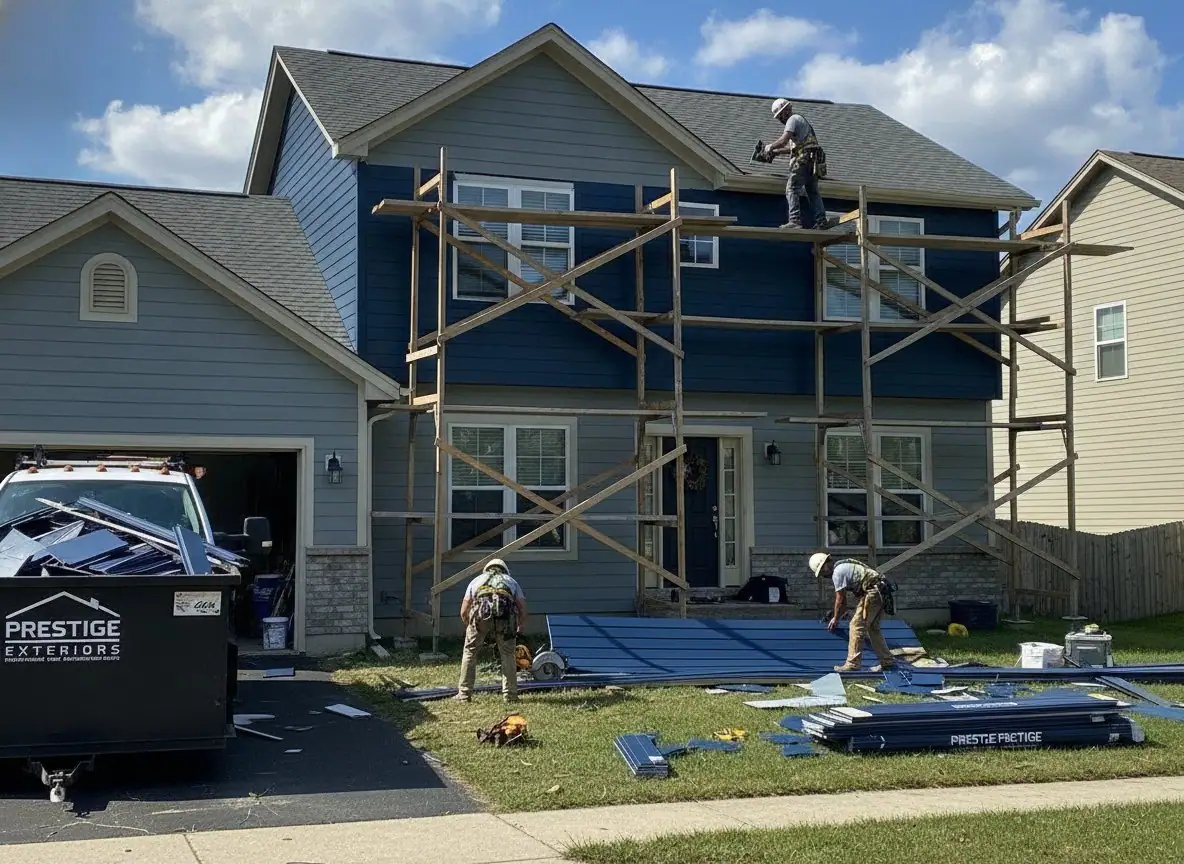
As Grady County’s seat and largest city, Chickasha features housing stock spanning from 1910s craftsman bungalows in the Choctaw Street historic district to 2010s suburban developments south of I-44. Older homes in the downtown-adjacent neighborhoods frequently present with failing T1-11 installed during 1970s renovation waves, while newer homes encounter premature vinyl panel failure due to south-facing UV exposure. Our siding installation services address both generations of construction.
Blanchard
Blanchard has experienced rapid residential growth since 2005, with hundreds of new homes built on expansive clay soils that cause measurable foundation movement. Fiber cement panel siding installed here requires wider expansion joints than standard manufacturer specifications to accommodate seasonal soil movement transferred through slab foundations.
Tuttle and Bridge Creek
These communities along State Highway 37 feature a mix of 1960s-era farmhouses and newer acreage homes. Proximity to the Canadian River makes moisture management the primary installation concern. We regularly address bottom-course rot and housewrap failures on homes in this corridor.
Minco and Ninnekah
These smaller communities feature predominantly wood-framed homes built between 1940 and 1975, many still clad in original T1-11 that has exceeded its service life. We provide cost-effective panel replacement and siding maintenance programs tailored to fixed-income and rural property owner budgets.
Panel Siding Maintenance Tips for Grady County Homeowners
- Inspect caulk joints every spring before tornado season (March–May): Grady County’s freeze-thaw cycles through January and February crack caulk that was applied more than five years ago. Recaulk any gaps wider than 1/16 inch with a paintable, UV-stable product rated for Oklahoma’s temperature range.
- Clean panels annually in October: After summer UV exposure, use a low-pressure garden hose and a mild detergent solution to remove algae, bird droppings, and accumulated red Oklahoma clay dust that holds moisture against the panel surface.
- Maintain a 2-inch clearance between panel bottom edges and grade: Grady County’s clay soils retain water after heavy spring rains, and bottom-edge contact accelerates moisture wicking into panel edges.
- Trim vegetation within 12 inches of all siding surfaces: The high humidity near the Canadian River corridor encourages rapid growth of climbing vines and dense shrubs that trap moisture and harbor insects.
- Repaint or refinish wood-based panels every 5–7 years: Chickasha’s 230 annual sunny days exceed the paint warranty threshold of most panel manufacturers.
- Check fastener heads for corrosion each fall: Galvanized fasteners can show surface rust within 10 years in high-humidity areas near the river. Spot-prime exposed fastener heads to prevent staining and rust migration.
- After any tornado watch event, walk the perimeter: Even near-miss tornado events generate wind-driven debris that can crack or dislodge panel sections without obvious interior signs.
Why Choose Grady County Siding Company for Panel Siding
Grady County Siding Company is a locally based contractor that works exclusively in Grady County and the surrounding central Oklahoma communities. We are not a regional franchise or a large metropolitan company that sends crews unfamiliar with local soil conditions, building codes, or the specific wind-load requirements that apply to construction in Oklahoma’s Wind Zone II designation.
Our crews have installed and replaced panel siding on everything from 1940s craftsman farmhouses in Chickasha’s oldest neighborhoods to post-2000 suburban homes on Blanchard’s expanding clay-soil subdivisions. We understand how Grady County’s planning and zoning office processes permits, what the Chickasha building inspection department looks for during final review, and how to specify installation details that address the Canadian River humidity gradient without inflating project costs unnecessarily.
Read moreShow less
We offer transparent, written estimates with itemized material and labor costs before any work begins. We stand behind our workmanship and source panels from manufacturers whose products are specifically rated for the Oklahoma climate. For a free consultation, call us at (405) 529-1859. Explore our full siding replacement services to see the complete scope of what we offer.
FAQ
Frequently Asked Questions About Panel Siding in Grady County, OK
How much does panel siding cost in Grady County, OK?
Panel siding costs in Grady County range from approximately $1.80 per square foot for basic T1-11 plywood panels to $14.00 per square foot for premium James Hardie ColorPlus fiber cement panels with full installation. A 1,200-square-foot siding project on a typical Chickasha-area home will run between $5,400 and $16,800 depending on material selection, existing wall condition, and any substrate repairs required. Foundation movement remediation, common on Blanchard’s clay-soil lots, can add $500–$3,000 to the base project cost.
How long does panel siding installation take in Grady County?
Most single-story residential panel siding replacements in Grady County take 3 to 6 working days from demolition through final caulking and cleanup. Larger two-story homes or projects requiring significant substrate repair may extend to 8 to 10 working days. Permit approval from the City of Chickasha or Grady County typically adds 3 to 5 business days before physical work can begin.
What is the best panel siding for homes near the Canadian River in Tuttle or Bridge Creek?
For homes in the high-humidity corridor along the Canadian River, we recommend primed fiber cement panels or James Hardie HardiePanel as the primary choice. Unlike engineered wood or T1-11, fiber cement does not absorb moisture, does not swell against fasteners, and resists fungal growth that thrives in the consistently humid microclimate of the river bottomlands. Vinyl sheet panels are a secondary option at a lower price point but lack the impact resistance fiber cement provides against tornado-season wind-driven debris.
Do I need a permit for panel siding replacement in Chickasha or Grady County?
Permit requirements vary by scope. The City of Chickasha generally requires a building permit for full siding replacement projects but may not require one for minor repair work covering less than 25% of a single wall elevation. Unincorporated Grady County properties may have different requirements. We handle all permit applications as part of our project process so you don’t need to navigate the building department independently.
How does Grady County’s tornado risk affect which panel siding I should choose?
Grady County’s location in Oklahoma’s highest tornado-risk zone means wind resistance is a legitimate product selection criterion, not just a marketing claim. Fiber cement panels and engineered wood panels both outperform vinyl sheet panels in wind-driven impact resistance. Proper fastening — specifically, ring-shank nails or corrosion-resistant screws at reduced spacing along edges — dramatically increases the wind uplift resistance of any panel type. We install all panels to FEMA P-499 high-wind construction guidelines applicable to Grady County’s Wind Zone II classification.
How long does panel siding last in Oklahoma’s climate?
In Grady County’s climate, properly installed and maintained fiber cement panels last 30 to 50 years. Engineered wood panels last 20 to 30 years with regular repainting every 5 to 7 years. Original T1-11 plywood panels from the 1970s typically reach the end of serviceable life at 30 to 40 years, meaning many Chickasha, Minco, and Ninnekah homes are currently at or past that threshold.
Can panel siding be repaired without full replacement?
Yes. When damage is limited to one or two panel sections — as is common after localized hail events or wind-driven debris impacts from spring thunderstorms — we can replace individual panels or sections and match the existing texture and profile closely. Full replacement is typically recommended only when more than 30% of panels show moisture infiltration or fastener failure, or when existing panels are T1-11 that has exceeded its service life. Contact our repair team for an assessment of whether targeted repair is appropriate for your home.
Do you serve areas outside Chickasha in Grady County?
Yes. We serve all of Grady County, including Chickasha, Blanchard, Tuttle, Minco, Ninnekah, Alex, Amber, Norge, Bridge Creek, Verden, Bradley, Pocasset, Middleberg, and Rush Springs. We also serve properties along the Oklahoma City metro fringe adjacent to Grady County’s northern boundary. Call us at (405) 529-1859 to confirm service availability at your specific address.
Get Your Free Panel Siding Estimate in Grady County Today
Whether you’re replacing aging T1-11 on a Chickasha farmhouse, upgrading to James Hardie fiber cement panels on a new Blanchard build, or repairing storm-damaged siding in Tuttle after a severe spring weather event, Grady County Siding Company is ready to help. Our team understands the specific demands that central Oklahoma’s soils, wind events, and UV intensity place on exterior cladding, and we bring that knowledge to every project we take on.
Contact us today to schedule your free, no-obligation on-site assessment. We’ll evaluate your existing siding condition, explain your material options in plain language, and provide a written estimate before any work begins. Call us directly at (405) 529-1859 or submit a service request through our contact page. We look forward to protecting your Grady County home for the decades ahead.
Get in touch
Find siding help near you
Request a free estimate online or give us a call — our team will follow up quickly.
- Call us(405) 529-1859
- Visit1807 S 9th St, Chickasha, OK 73018
- HoursMon - Sun: 7AM - 7PM